
编者按
近日,中国社会保障学会副会长、浙江大学共享与发展研究院副院长何文炯教授接受《南华早报》采访,标题为“How China could narrow a tech hub’s income gap – and avoid Silicon Valley’s fate”,与读者分享。
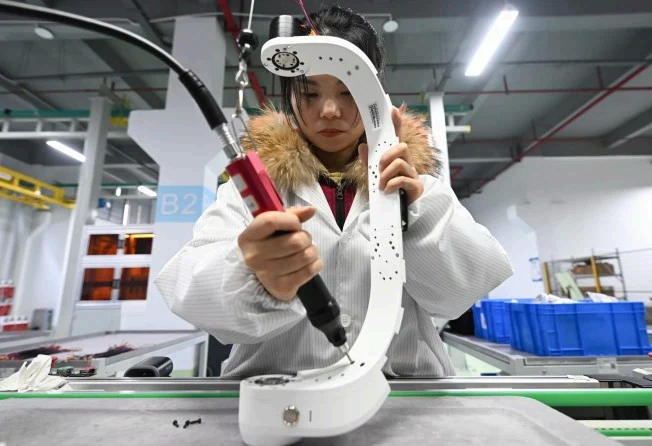
An employee works on the production line of the Tashan hip-assisted exoskeleton at a workshop in Hangzhou, capital of Zhejiang province. Photo:China News Service/VCG via Getty Images
Ahead of China’s annual legislative meetings – typically a window into Beijing’s top-level policy agenda – this is the third entry in a series examining the complex economic recalibration driving China’s growth philosophy and its wide-ranging implications for local governments, financial investors and private enterprises.
In China’s eastern province of Zhejiang, a sprawling laboratory for Beijing’s “common prosperity” campaign to reduce income inequality, statistics suggest success: between 2021 and 2025, its urban-rural income gap narrowed from a ratio of 1.96 to 1.81 – a rare feat of compression during an era of surging technological growth.
But as Zhejiang – home to tech giant Alibaba, which owns the South China Morning Post, and upstarts DeepSeek and Unitree Robotics – becomes a hub for China’s advanced manufacturing and digital economy, a harder question is emerging: can it avoid the fate of Silicon Valley, where historic wealth creation coexists with stark inequality?
Local authorities are hoping to resolve this thorny contradiction through sustained application of policy.
The provincial government has mandated that by 2030, the gap between city and countryside incomes “keeps shrinking further” based on the progress achieved in the past five years, while both per capita gross domestic product and average income reach levels “close to” those in developed economies, according to a draft plan released this month.
Having long been one of the few places in the country where rural residents enjoy relatively strong living standards despite the national urban-rural divide, Zhejiang was designated as a demonstration zone in 2021 to pursue President Xi Jinping’s “common prosperity” goal.
Over the years, it has also emerged as one of China’s most dynamic tech powerhouses, with cutting-edge businesses specialising in artificial intelligence, robotics, gaming, brain-computer interfaces and more.
But its ambition for shared economic gains runs counter to the recent experiences of the global tech hub opposite the Pacific Ocean.
Amid a tech boom, Silicon Valley is seeing widening wealth disparity, with 0.1 per cent of residents controlling 71 percent of the wealth in the region, researchers from San Jose State University said in a November report.
About 15 per cent of the region’s wealth is concentrated in just nine households, whereas 110,000 households have few or no net assets at all, according to the Silicon Valley Pain Index, an annual report that measures inequality.
As the current wave of tech revolution leads to capital-intensive production and replaces workers on a scale never seen before, “the conventional idea that jobs naturally spread the wealth is basically broken, and the fallout is huge – no country can escape it,” said Xiong Wansheng, a professor at East China University of Science and Technology in Shanghai.
In China, this challenge is even tougher, he noted, “because the social safety net remains relatively underdeveloped compared with developed countries – particularly in areas like pension provision, unemployment support and family policies, where significant gaps and shortcomings persist”.
“China enjoys some institutional room for manoeuvre that Western countries lack, but it’s not wise to rush into policies,” he said, referring to redistribution measures.
“Whether it’s Silicon Valley or China, protecting enterprise growth and development must remain the top priority in any case,” he warned.
In Zhejiang’s draft plan dedicated to common prosperity for the next five years, it vowed to develop income growth plans for all residents, encourage companies to introduce flexible and varied equity incentives and employee shareholding schemes, and better utilise idle farmhouses across the entire province.
Without setting specific numerical targets, policymakers have laid out a vision for life in the province circa 2035 in their draft plan, where all people enjoy abundant material and cultural lives, and per capita GDP and incomes have reached the levels of a developed economy.
The plan also called for more balanced urban-rural and regional development, optimised income and wealth distribution, higher standards in the rule of law and social safety and significantly improved governance modernisation.
But the plan also warned against “overreaching ambitions or unrealistic expectations”, vowing to “coordinate development with security, needs with possibilities and follow the objective laws of economic and social development”.
Zhejiang reported an urban-to-rural per capita disposable income ratio of 1.81 last year, down by 0.02 from 2024 and 0.15 from 2021. That compares to the national average of 2.31 in 2025, according to the National Bureau of Statistics(NBS).
People learn about AI model DeepSeek at a fair themed on AI technologies in HangzhouCity, east China’s Zhejiang Province. Photo: Xinhua
The Gini coefficient, which better reflects wealth distribution and typically ranges between zero – perfect equality –and one – perfect inequality, is not publicly available for the province.
Nationwide, the income Gini, which focuses on annual earnings but not assets, was 0.465 in 2024, NBS data showed, but it is widely believed the number is higher in reality. In comparison, this measurement in the United States stood at 0.418 in 2023, according to the World Bank.
Having long been the residence of wealthy Chinese, Zhejiang’s tech advancement, especially in the areas of large AI models and robotics, has created or significantly enriched several new billionaires from the world of tech.
For example, DeepSeek’s Liang Wenfeng saw his net worth surge to an estimated US$11.5 billion due to the firm’s skyrocketing valuation, landing him in Forbes’ 2025 China’s 100 Richest list.
“Scientific and technological progress, along with its widespread application in production and daily life, is fundamentally changing the ways wealth is created, accumulated and distributed,” said He Wenjiong, professor and deputy head of the Institute for Common Prosperity and Development at Zhejiang University.
“Therefore, while encouraging and supporting innovation, we must also improve the relevant rules governing social operations,” he said.
He suggested more efforts to evaluate and address the potential impact of tech innovation on labour employment, while enhancing vocational education and training to improve workers’ adaptability to modern technology.
Meanwhile, he said, there should be equal access to essential public services and a universal basic income system to ensure people’s fundamental living security and core development needs.
专家简介
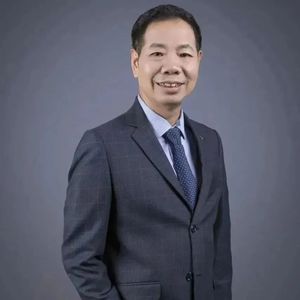
何文炯,浙江大学公共管理学院教授、浙江大学民生保障与公共治理研究中心主任、浙江大学老龄和健康研究中心名誉主任、浙江大学共享与发展研究院副院长、浙江大学残疾人共同富裕研究中心主任;中国社会保障学会副会长、中国残疾人事业发展研究会副会长、中国保险学会第八届和第九届副会长。长期从事社会保障、风险管理和基本公共服务研究,主持国家自然科学基金重大项目、国家社会科学基金重大项目以及中央部委和省级政府委托的重大项目19项,发表学术论文120余篇,科研成果获得省部级科研成果一等奖5项,多项科研成果直接服务于民生保障领域的国家立法、中央和国务院文件制定、国家规划编制和行业标准制定。
本文来源于:南华早报